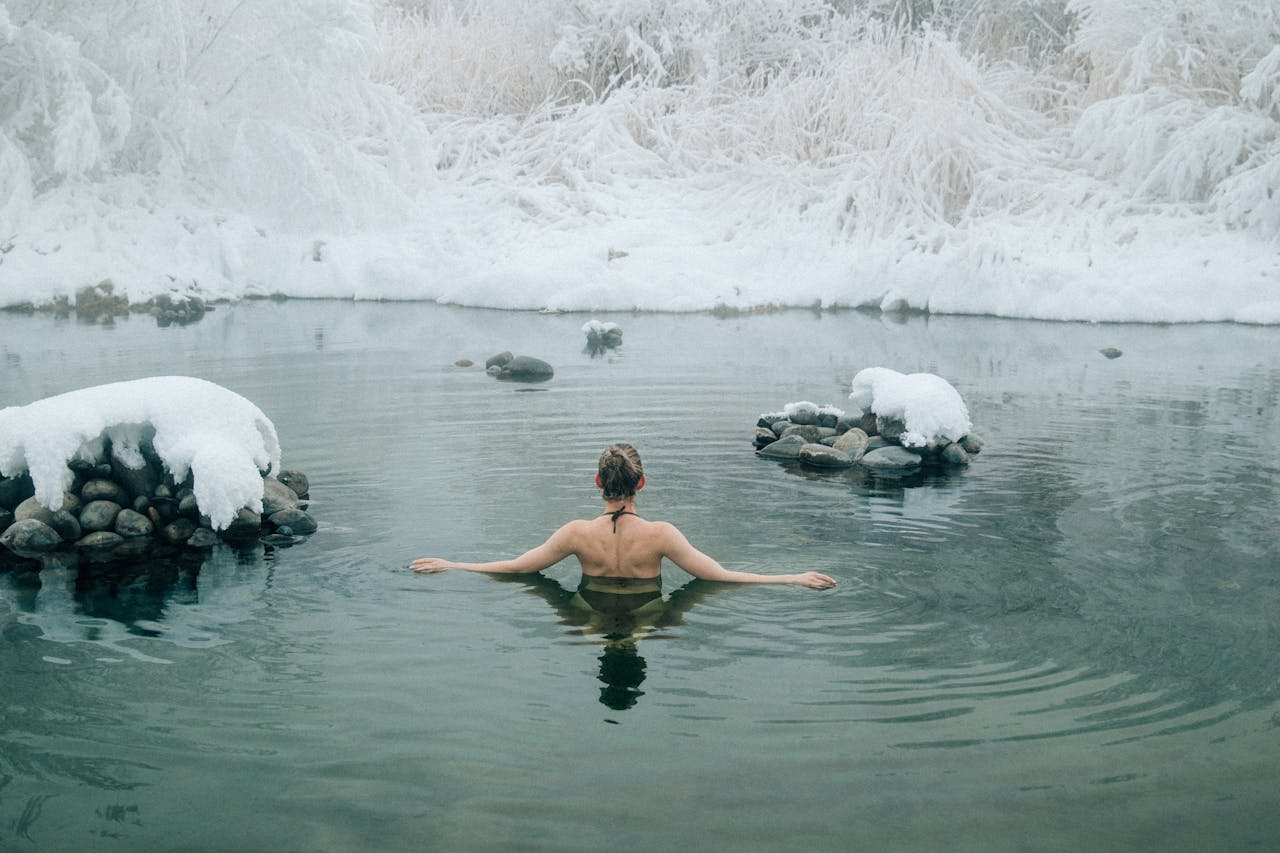
I still remember my first winter swimming experience. I walked up to the edge of the frozen sea, watched my breath turn to fog in the air, and thought I was ready. But the second that ice-cold water hit my chest, my body had other ideas. My breath caught, my heart raced, and for a moment, I genuinely panicked. Luckily that first time I didn't actually swim, I was just holding the ladder while being submerged in the water.
That's when I learned the most important lesson about cold water swimming: it's not just about being tough or brave. It's about knowing how to breathe.
If you're getting into winter swimming or ice swimming, mastering your breathing will transform your experience from terrifying to absolutely exhilarating. Let me share the techniques that helped me go from gasping beginner to someone who actually looks forward to those freezing dips.
Before You Even Get In: Pre-Entry Breathing
The work starts before you touch the water. Trust me on this.
1. The 4-7-8 Calm Down
About five minutes before I enter the water, I do what I call my "calm down breathing." Breathe in through your nose for 4 counts, hold it for 7, then exhale slowly through your mouth for 8. Do this three or four times. It sounds simple, but it shifts your nervous system from fight-or-flight to a calmer state. You're basically telling your body, "Hey, we're okay. This is intentional."
2. Box Breathing for Focus
This one's borrowed from meditation, and it works beautifully. Inhale for 4 counts, hold for 4, exhale for 4, hold for 4. Repeat it 5-6 times. It helps me stay present instead of psyching myself out about how cold the water is. Your mind gets focused, and that scattered nervous energy settles down.
3. The Power Breath
Right before entry—and I mean right before—I take one deep, powerful breath in through my nose, filling my belly first, then my chest. Then I let it out slowly and completely. This is my signal: "I'm ready." It's become such a ritual that my body knows what's coming next.
Managing That Gasp Reflex (It's Real, and It's Intense)
Here's what nobody tells beginners about cold water swimming: your body WILL try to gasp when you first get in. It's called the cold shock response, and it's completely normal. The key is managing it, not fighting it.
4. The Controlled Gasp
When that cold water hits you, you're going to want to gasp. Instead of trying to suppress it, do this: take a sharp but controlled inhale through your nose or pursed lips. Make it intentional rather than panicked. Think "surprised" not "drowning." This small shift in mindset makes a huge difference.
5. Hum or Whistle Out
This sounds weird until you try it. After that initial controlled gasp, start humming or whistling as you exhale. It forces your breath to slow down and gives you something to focus on besides the shock.
Staying Calm Once You're In
The first 30 seconds are the hardest. After that, if you can keep your breathing steady, your body starts to adapt. These techniques help me stay calm instead of cutting my swim short.
6. Rhythmic Swimming Breaths
Once I start swimming, I establish a rhythm immediately. For breaststroke (my favorite in cold water), I breathe in on the glide, out on the pull. For front crawl, I keep it simple: breathe every three strokes. The rhythm becomes meditative. It's not about speed; it's about consistency.
7. The "Just Five More" Technique
When I feel my breathing getting shaky or my mind starting to panic, I tell myself, "Just five more breaths." Then I count them. Slowly. Deliberately. Usually by the time I hit five, I've calmed down and can keep going. If not, I do another five. This has helped me extend my cold water swimming sessions from barely 30-40 seconds to a comfortable 3-5 minutes. Remember that you are not competing on time here but rather enjoying the experience, so any amount of time is good for your body and mind.
After You Get Out: Recovery Breathing
Getting out is not the finish line. After-drop is real—that's when your body temperature can actually continue dropping even after you've left the water. Proper breathing helps your body warm up safely.
8. The Warming Breath
As soon as I'm out and getting dried off, I do what I call "warming breaths." Breathe in deeply through your nose, filling your belly completely. Hold it for just a moment. Then exhale slowly, imagining warmth spreading through your body. Focused breathing genuinely helps your circulation kick back in.
9. Extended Exhale Recovery
While you're getting dressed (quickly—don't stand around!), keep your exhales longer than your inhales. In for 3 counts, out for 6. This helps regulate your body temperature and keeps you from shivering so intensely. It's been a game-changer for my post-swim recovery the first time I learned about this.
Why This All Matters
Look, cold water swimming is incredible for your mental health, your immune system, and your overall sense of badassery. But it can also be genuinely dangerous if you don't respect the cold water shock response and manage your breathing.
These techniques aren't just about making your swim more comfortable (though they do that). They're about staying safe. Panic in cold water is when people get into trouble. Controlled breathing keeps panic at bay.
Start Small, Build Up
If you're new to winter swimming, please don't try to be a hero on your first day. Start with warmer autumn water and practice these breathing techniques as the temperature drops. Give your body time to acclimatize. Some people take weeks or even months to build up their cold tolerance—and that's completely fine.
And never, ever swim alone. Always have someone watching, even if you're an experienced winter swimmer. The cold can be unpredictable.
My Breathing Ritual Now
These days, my pre-swim routine is almost sacred. I arrive at the sea or the river, chat with my swimming group, do my 4-7-8 breathing while getting changed. I walk to the water's edge, do my box breathing, take that final power breath, and in I go.
The cold still shocks me every single time. But now I know exactly what to do with my breath, and that makes all the difference between a miserable experience and something I genuinely love.
Winter swimming has become one of the highlights of my week. The clarity I feel afterward, the sense of accomplishment, the rush of warmth as my body recovers—it's addictive in the best way.
But none of that would be possible without learning to breathe properly first.
If you're thinking about starting your cold water swimming journey, focus on your breath before you focus on anything else. Master these techniques in warmer water first. Build your confidence. And when you're ready for that first winter swim, you'll know exactly what to do when the cold hits.
Trust your breath. It won't let you down.